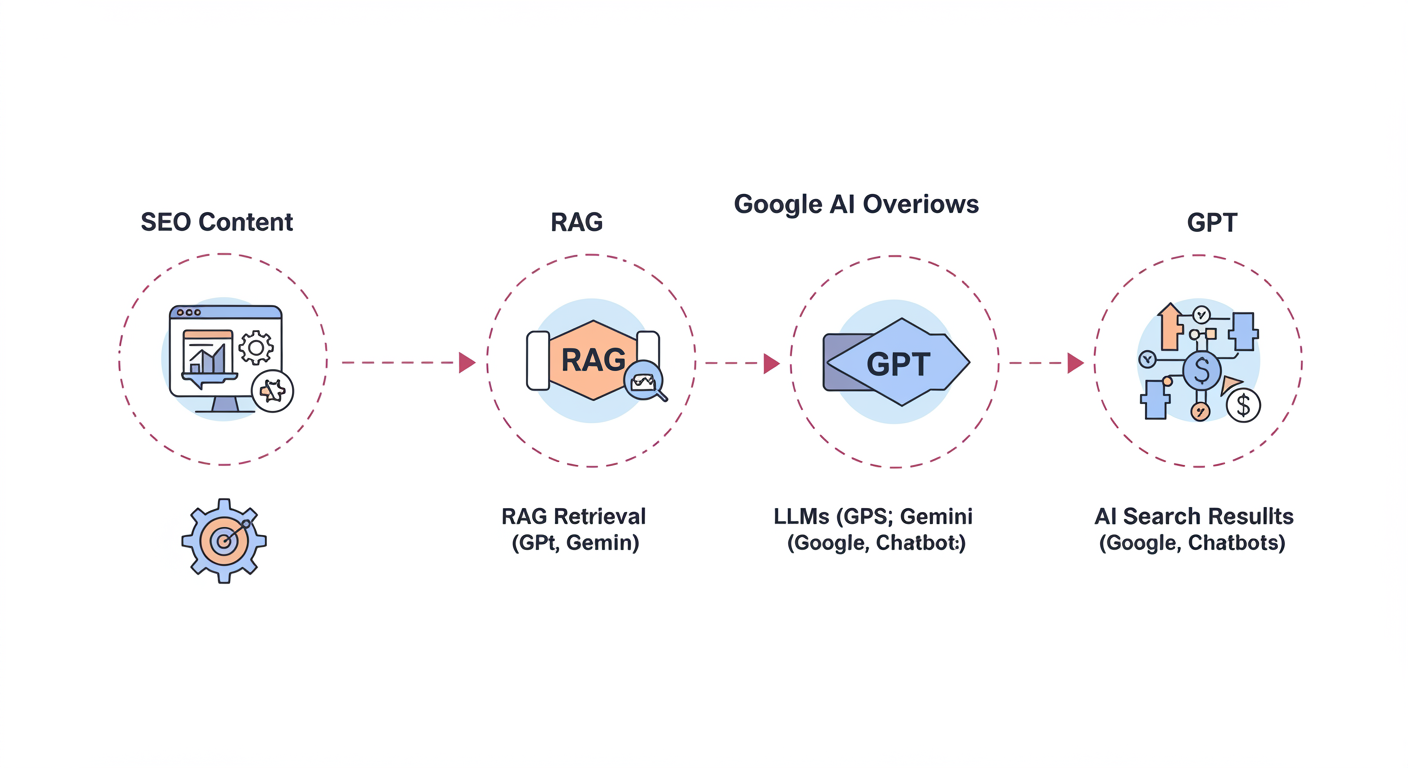
SEO Updates from Google I/O 2025 and the rise of AI Overviews refer to significant changes in Google's search algorithms, content ranking priorities, and new AI-driven search features announced at its annual developer conference. These updates necessitate strategic adjustments by SEO professionals and website owners to maintain and improve search visibility and user engagement in this evolving landscape.
The digital world stood still as Google I/O 2025 unfolded, and the aftershocks are already reshaping the SEO landscape. With AI Overviews (formerly SGE) taking center stage and a host of algorithm refinements announced, it's no longer business as usual. For digital marketers, startup founders, and small business owners, especially those in dynamic markets like Nepal, understanding and adapting to these changes is paramount. This post breaks down the 10 most critical SEO updates you need to implement now.
Quick Summary / TL;DR
- AI Overviews are King: Optimizing for direct answers and featured snippets is crucial.
- E-E-A-T is Amplified: Demonstrating experience and expertise is more vital than ever.
- Semantic & Conversational Search: Content needs to answer questions comprehensively.
- Video & Multimedia SEO: Visual content gains more prominence in SERPs.
- Structured Data for AI: Enhanced schema markup will feed AI Overviews more effectively.
- User Experience (UX) Signals: Beyond Core Web Vitals, holistic UX matters.
- Content Authenticity & Originality: Google is cracking down on low-quality, unoriginal AI content.
- Hyper-Personalization: Search results will become even more tailored to individual users.
- The Rise of "Perspectives": Diversified content formats and viewpoints are favored.
- Ethical AI & SEO: Transparency and responsible AI use in content creation are key.
1. AI Overviews: The New Frontier for Visibility
Google I/O 2025 cemented AI Overviews as a dominant feature in search results. These AI-generated summaries aim to provide direct answers, meaning users might not click through to individual pages as often for simple queries. According to Google's official announcement, AI Overviews have now scaled to 1.5 billion monthly users across 200 countries and territories.
- The Impact: Potential decrease in organic click-through rates for some queries, but a massive opportunity to be the source for AI Overviews.
- What You Need To Do:
- Focus on "Answer-First" Content: Structure your content to provide clear, concise answers to specific questions early on.
- Optimize for Featured Snippets: Tactics for featured snippets are highly relevant for AI Overviews.
- In-depth, Comprehensive Content: While the overview gives a summary, your linked page should provide the depth that justifies a click.
For businesses looking to optimize for AI search, check out our detailed guide on how to rank on AI Overviews and GPT-powered search.
2. E-E-A-T Gets an "Experience" Boost and Deeper AI Scrutiny
Google continues to emphasize Experience, Expertise, Authoritativeness, and Trustworthiness (E-E-A-T). The "Experience" component, added more recently, is now being more deeply analyzed by Google's AI to verify authenticity. Google's official E-E-A-T guidelines emphasize the importance of demonstrating first-hand experience in content creation.
- The Impact: Websites lacking genuine, first-hand experience or demonstrable expertise in their niche will struggle.
- What You Need To Do:
- Showcase Real-World Experience: Include case studies, testimonials, author bios highlighting relevant experience, and content that reflects genuine interaction with the topic.
- Authoritative Sourcing: Link to reputable sources and get cited by them.
- User-Generated Content: Leverage reviews and Q&A sections where appropriate, ensuring they are authentic.
- About Us & Author Pages: Make them detailed and transparent.
Learn more about establishing expertise in our guide to finding the best SEO expert in Nepal, which demonstrates the importance of proven experience and credibility.
3. Mastering Semantic and Conversational Search
With AI's enhanced Natural Language Processing (NLP) capabilities, Google better understands the intent behind conversational queries. Search is less about exact keywords and more about topics and the relationships between concepts.
- The Impact: Keyword stuffing is dead (again). Content that holistically covers a topic and answers follow-up questions will perform better.
- What You Need To Do:
- Create Topic Clusters: Develop pillar pages and supporting content that comprehensively covers a subject.
- Use Natural Language: Write for humans, addressing questions they would actually ask.
- Long-Tail Keywords: Focus on conversational long-tail keywords that mimic voice search queries.
For startups looking to build topic authority, our SEO tips to boost startups' online presence provides actionable strategies for comprehensive content development.
4. The Surge of Video and Multimedia SEO
Google I/O 2025 highlighted advancements in understanding and indexing video content. AI Overviews are also increasingly likely to incorporate video snippets. Research from SE Ranking shows that multimedia content is increasingly featured in AI Overview responses.
- The Impact: Websites prioritizing high-quality, well-optimized video and image content will see increased visibility.
- What You Need To Do:
- Optimize Video Content: Use descriptive titles, detailed descriptions, relevant tags, and create transcripts.
- Schema Markup for Video: Implement
VideoObjectschema. - Engaging Thumbnails: Create compelling thumbnails that encourage clicks.
- Image Optimization: Alt text, descriptive file names, and modern image formats remain crucial.
5. Structured Data: Fueling the AI Engine
Structured data (Schema markup) is no longer just a recommendation; it's becoming essential for helping Google's AI understand and process your content for AI Overviews and richer search results. Google announced potential new schema types and greater emphasis on existing ones.
- The Impact: Properly implemented structured data can significantly increase your chances of being featured in AI Overviews and rich snippets.
- What You Need To Do:
- Comprehensive Schema Implementation: Go beyond basic
ArticleorProductschema. ExploreFAQPage,HowTo,Event,Review, and niche-specific schemas. - Stay Updated on New Schema Types: Monitor Google's documentation for new recommendations relevant to AI.
- Validate Your Markup: Use Google's Rich Results Test regularly.
- Comprehensive Schema Implementation: Go beyond basic
For a comprehensive approach to technical SEO optimization, refer to our ultimate SEO audit checklist which covers structured data implementation in detail.
6. Holistic User Experience (UX) Beyond Core Web Vitals
While Core Web Vitals (LCP, FID/INP, CLS) remain important, Google's AI is getting better at assessing overall user experience. This includes navigation, content clarity, mobile-friendliness, and ad intrusiveness. Google's helpful content guidelines emphasize the importance of people-first content and user experience.
- The Impact: Websites providing a seamless, intuitive, and satisfying user journey will be rewarded.
- What You Need To Do:
- Simplify Navigation: Ensure users can easily find what they're looking for.
- Improve Readability: Use clear fonts, good contrast, short paragraphs, and headings.
- Mobile-First Design: Ensure your site is flawless on all devices.
- Minimize Intrusive Elements: Avoid aggressive pop-ups or excessive ads that disrupt the user experience.
7. Prioritizing Content Authenticity and Original Insights
With the proliferation of AI-generated content, Google is doubling down on rewarding original, insightful, and genuinely helpful content. I/O 2025 hinted at more sophisticated AI detection for spammy, low-value AI-generated content.
- The Impact: Websites relying heavily on unedited or low-quality AI-generated content will likely see penalties or reduced visibility.
- What You Need To Do:
- Focus on Original Research & Data: Provide unique insights that can't be easily replicated.
- Human Oversight for AI Content: If using AI for content creation, ensure significant human editing, fact-checking, and value-add.
- Develop a Unique Brand Voice: Let your personality and expertise shine through.
8. Adapting to Hyper-Personalization in Search
Google continues to refine its ability to deliver hyper-personalized search results based on user history, location, context, and even previous interactions within a session.
- The Impact: Search results can vary significantly from user to user, making "ranking #1" a more fluid concept.
- What You Need To Do:
- Understand Your Audience Segments: Create detailed user personas.
- Broaden Keyword Strategy: Target a wider range of related keywords and user intents.
- Local SEO (If Applicable): Optimize Google Business Profile and create locally relevant content. For businesses in Nepal, this means localized content in Nepali or tailored to specific regions.
For Nepal-specific optimization strategies, explore our comprehensive guide on local SEO for businesses in Nepal.
9. The "Perspectives" Filter and Diversified Content
Google is increasingly showing a "Perspectives" filter, aiming to surface content from forums, social media, and blog posts that offer diverse viewpoints and first-hand experiences.
- The Impact: Opportunities for less traditional website content (like forum participation or detailed blog comments if indexed) to gain visibility. Content should foster discussion.
- What You Need To Do:
- Engage in Relevant Communities: Participate in forums and Q&A sites within your niche.
- Encourage User Interaction: Foster comments and discussions on your blog posts.
- Consider Multiple Content Formats: Blog posts, videos, podcasts, forum-style Q&As on your site.
10. Ethical AI in SEO and Content Creation
A subtle but important theme from I/O 2025 was the responsible use of AI. While Google provides AI tools, it expects transparency and ethical application from creators.
- The Impact: Black-hat AI SEO tactics (e.g., mass-generating low-quality, deceptive content) will be heavily penalized. Transparency with users might become a trust signal.
- What You Need To Do:
- Use AI as an Assistant, Not a Replacement: Leverage AI for brainstorming, outlining, and optimizing, but ensure human expertise guides the final product.
- Be Transparent (If Applicable): Consider disclosing AI assistance if content is largely AI-generated, though Google's primary concern is quality and helpfulness, not the tool used.
- Focus on User Value: Ensure any AI-assisted content genuinely serves the user's needs.
Preparing Your SEO Strategy for the Post-I/O 2025 Era
Adapting to these SEO updates from Google I/O 2025 isn't just about tweaking a few meta tags. It requires a holistic shift towards:
- User-centricity: Always prioritize the user's needs and experience.
- Authenticity: Genuine expertise and original content are gold.
- Technical Prowess: Keep up with structured data, site speed, and mobile optimization.
- Content Diversity: Embrace various formats, especially video and interactive content.
- Continuous Learning: The SEO landscape is always evolving. Stay curious and informed.
For those looking to understand the broader impact of SEO on business growth, read about how SEO can transform digital growth in Nepal and discover what SEO means in digital marketing.
Conclusion
Google I/O 2025 has accelerated the integration of AI into search, fundamentally altering how users find information and how businesses need to approach SEO. By focusing on high-quality, authoritative content, user experience, and leveraging structured data, you can navigate these changes successfully. The future of SEO is about providing genuine value and building trust, principles that resonate deeply in markets like Nepal where authentic relationships and local expertise matter most.
If you're looking for expert guidance in implementing these strategies, consider working with an SEO expert in Nepal who understands both global trends and local market dynamics.