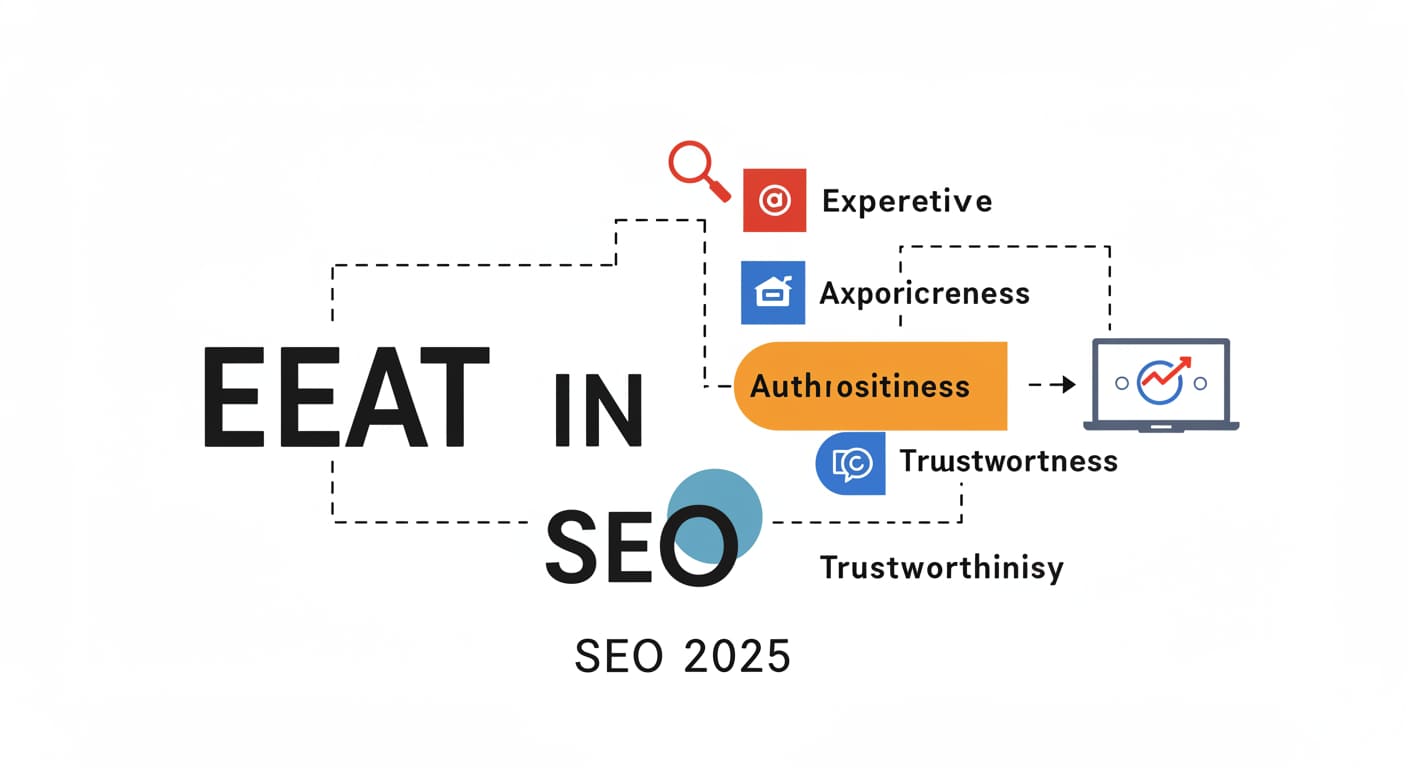

In the ever-evolving landscape of Search Engine Optimization (SEO), E-E-A-T has become a cornerstone for content quality and search visibility. E-E-A-T stands for Experience, Expertise, Authoritativeness, and Trustworthiness. These are the core principles Google's Search Quality Raters use to evaluate the helpfulness and reliability of web content, significantly influencing how pages rank in search results, especially as we head further into 2025 with the rise of AI Overviews.
Understanding and implementing E-E-A-T is no longer optional; it's essential for anyone looking to achieve sustainable SEO success and earn a coveted spot in Google's Featured Snippets and AI-driven summaries. For a foundational understanding, you might also want to explore what SEO is in digital marketing.
Quick Summary: Understanding E-E-A-T
| Component | Description | Why It Matters for SEO (2025) |
|---|---|---|
| Experience | The first-hand, real-world involvement of the content creator with the topic. | Adds authenticity and practical value, crucial for AI Overviews seeking genuine insights. |
| Expertise | The demonstrable skill and knowledge of the content creator in the specific field. | Ensures accuracy and depth, helping users make informed decisions. |
| Authoritativeness | The reputation and recognized standing of the content creator, the content itself, and the website. | Signals to Google that the content is a reliable source, often built via external validation. |
| Trustworthiness | The overall safety, transparency, and reliability of the content, the creator, and the website. | The most critical component; without trust, the other elements have less impact. |
Diving Deeper: What is E-E-A-T in SEO?
E-E-A-T is an evolution of Google's earlier E-A-T guidelines, with "Experience" being the newest addition formally acknowledged in late 2022. This framework helps Google assess whether content is created to be genuinely helpful to users, rather than solely to rank in search engines. It's a foundational concept in Google's Search Quality Rater Guidelines, a document used by human evaluators to assess the quality of search results, which in turn helps Google refine its algorithms.
Experience: The Value of First-Hand Knowledge
The "Experience" component, which can be further explored through various personal experiences, looks at whether the content creator has actual, practical experience with the subject matter. For instance:
- A review of a product written by someone who has used it.
- Travel advice from someone who has visited the destination.
- A tutorial for a software created by someone who uses it regularly.
Why it matters in 2025: With the proliferation of content, including AI-generated content, firsthand experience provides a layer of authenticity that is harder to replicate and highly valued by users and search engines alike. Google wants to surface results from those who've "been there, done that."
Expertise: Demonstrating Skill and Knowledge
"Expertise" refers to the specialized knowledge and skill of the content creator on the topic. This is particularly crucial for "Your Money or Your Life" (YMYL) topics—pages concerning health, finance, safety, and legal advice—where inaccurate information can have serious consequences, a concept well-covered by resources like Search Engine Journal on YMYL.
- Medical advice should come from qualified medical professionals.
- Financial planning content should be from certified financial experts.
Why it matters in 2025: Users seek accurate and reliable information. Demonstrating expertise builds credibility and ensures your content is a go-to resource rather than a source of misinformation.
Authoritativeness: Being a Recognized Source
"Authoritativeness" is about the reputation of the creator, the content, and the website as a whole. It answers the question: "Is this source widely recognized as an authority on this topic?"
- Citations and mentions from other reputable websites in your niche.
- Awards, recognitions, or affiliations with respected organizations.
- A strong, positive online presence and brand reputation.
Why it matters in 2025: Authoritativeness signals to Google that your content is respected within its field. As AI Overviews synthesize information from multiple sources, being recognized as an authority increases the likelihood of your content being included when users rank on AI Overviews and other LLMs.
Trustworthiness: The Foundation of Credibility
"Trustworthiness" (often considered the most important of the four) encompasses the safety, honesty, and reliability of the content, the creator, and the website.
- A secure website (HTTPS), as recommended by Google Search Central.
- Clear and accessible contact information.
- Transparent authorship, including author bios and credentials.
- Positive user reviews and testimonials.
- Clear privacy policies and terms of service.
Why it matters in 2025: Trust is paramount. Users need to feel safe and confident in the information they consume and the websites they visit. Google prioritizes sites that demonstrate high levels of trustworthiness to protect its users.
Why is E-E-A-T Crucial for SEO in 2025?
The digital landscape is continuously evolving, and Google's algorithms are becoming more sophisticated in identifying genuinely helpful content. Here’s why E-E-A-T is more critical than ever:
- Rise of AI Overviews and Generative AI: Google's AI Overviews aim to provide direct answers by synthesizing information. These systems will likely favor content demonstrating strong E-E-A-T to ensure the summarized information is accurate and reliable. As Google itself stated regarding AI-generated content, focusing on helpful, reliable, people-first content aligned with E-E-A-T is key.
- Combatting Misinformation: The internet is awash with information, not all of it accurate. E-E-A-T helps Google filter out low-quality, misleading, or harmful content.
- User Expectations: Users are increasingly discerning. They seek out credible sources and are more likely to engage with and return to websites they trust.
- Long-Term SEO Success: Focusing on E-E-A-T is not a short-term tactic but a long-term strategy that aligns with Google's core mission: to provide users with the most relevant and reliable information. This often involves understanding how to grow your business online with an SEO specialist.
- Featured Snippet Eligibility: Content that is clear, authoritative, and directly answers user queries—hallmarks of strong E-E-A-T—has a higher chance of being featured in snippets.
How Google (Likely) Measures E-E-A-T
While Google doesn't assign a direct "E-E-A-T score," its algorithms use various signals to infer these qualities. These signals are often what the Quality Raters are instructed to look for:
- On-Page Signals:
- Content Quality: Depth, accuracy, comprehensiveness, originality, and clarity.
- Author Information: Clear author bios, credentials, links to author pages or social profiles.
- About Us/Contact Pages: Transparency about the website, its mission, and the people behind it. Easy-to-find contact information.
- Citations and Sources: Referencing other authoritative sources, especially for factual claims.
- Website Security: HTTPS encryption.
- User Experience (UX): Page load speed, mobile-friendliness, clear navigation, and an overall positive user experience.
- Off-Page Signals:
- Backlinks: Links from other reputable and relevant websites, a topic often covered by experts like Moz on link building.
- Brand Mentions: Mentions of your brand, authors, or website on other authoritative platforms, news sites, forums, and social media.
- Online Reviews and Reputation: What others say about your business or website on review sites, forums, and social media.
- Expert Endorsements: Recognition or endorsements from known experts in the field.
- Experience Signals (Newer Focus):
- Content that clearly demonstrates the creator has used a product, visited a place, or personally experienced what they are writing about.
- Use of original photos/videos versus stock imagery.
- Detailed, nuanced insights that go beyond generic information.
Google emphasizes that for YMYL topics, the standards for E-E-A-T are much higher.
Practical Strategies to Improve Your Website's E-E-A-T in 2025
Improving E-E-A-T is an ongoing process. Here are actionable steps:
1. Showcase Experience:
- Create Content Based on Real-World Use: If reviewing a product, actually use it. If discussing a service, have experience with it.
- Use Original Media: Include your own photos, videos, and screenshots.
- Share Case Studies and Personal Stories: Illustrate points with real-life examples and outcomes, like this SEO case study for NCM.
- Encourage User-Generated Content (UGC): Genuine customer reviews and testimonials can powerfully demonstrate experience.
2. Demonstrate Expertise:
- Authoritative Author Bios: Clearly display author credentials, qualifications, education, and relevant experience. Link to their social profiles or other publications.
- Create Comprehensive, In-Depth Content: Cover topics thoroughly, answering common and nuanced questions.
- Fact-Check Rigorously: Ensure all information is accurate and up-to-date.
- Cite Reputable Sources: Link to academic studies, industry reports, and other expert sources to back up claims.
- Consider Expert Reviews: For critical content, especially YMYL, have it reviewed by a qualified expert.
3. Build Authoritativeness:
- Earn Quality Backlinks: Focus on acquiring links from respected websites in your industry.
- Engage in PR and Outreach: Get your brand and experts featured in industry publications or events.
- Become a Thought Leader: Publish original research, white papers, or unique insights.
- Maintain a Consistent and Professional Online Presence: Across your website, social media, and other platforms.
- List Awards and Recognitions: If your business or authors have received accolades, display them.
4. Establish Trustworthiness:
- Secure Your Website (HTTPS): This is a basic requirement.
- Provide Clear Contact Information: Make it easy for users to reach you (address, phone number, email).
- Transparent Policies: Have clear and accessible privacy policies, terms of service, and refund/return policies if applicable.
- Manage Online Reputation: Monitor and respond to online reviews (both positive and negative) professionally.
- Be Transparent About Affiliations: Clearly disclose sponsored content or affiliate relationships.
- Minimize Intrusive Ads: Excessive or disruptive ads can erode trust.
E-E-A-T for Different Types of Websites
The emphasis on different aspects of E-E-A-T can vary:
- YMYL Websites (Health, Finance, Legal, Safety): All aspects of E-E-A-T are critically important. Expertise and Trustworthiness are paramount. Google holds these sites to the highest standards.
- E-commerce Websites: Trustworthiness (secure payments, clear return policies, genuine reviews) and Experience (authentic product reviews, user-generated photos) are key.
- Hobby/Interest Blogs: Experience (personal anecdotes, hands-on tutorials) and Expertise can be more heavily weighted than formal Authoritativeness. Authenticity often shines here. You can find more such blogs here.
- News Websites: Expertise (knowledgeable journalists), Authoritativeness (reputation for accuracy), and Trustworthiness (clear editorial standards, corrections policy) are vital.
The Future of E-E-A-T with AI-Generated Content
The rise of AI content generation tools presents both opportunities and challenges for E-E-A-T. While AI can assist in creating content quickly, it often lacks genuine experience and can sometimes produce inaccuracies.
- Human Oversight is Crucial: AI-generated content should always be reviewed, edited, and fact-checked by a human expert.
- Injecting 'Experience': AI cannot replicate genuine personal experience. This is where human creators can add unique value.
- Transparency: If AI is significantly used in content creation, being transparent about it might become a trust signal in the future.
- Focus on Value: Regardless of how content is created, it must be helpful, reliable, and provide real value to the user. E-E-A-T principles are the benchmark for this.
Google’s stance is not against AI content, but against low-quality, unhelpful content, whether created by humans or AI. Strong E-E-A-T will be a key differentiator for high-quality, AI-assisted content, a topic relevant to SEO updates after Google I/O 2025.
Conclusion: E-E-A-T as Your North Star for SEO in 2025
E-E-A-T is not just another SEO buzzword; it’s a fundamental shift in how Google assesses content quality and a reflection of what users truly want: reliable, expert-driven, authoritative, and trustworthy information from sources with real experience.
By prioritizing E-E-A-T in your content strategy, you not only align with Google's guidelines but also build a stronger, more credible online presence that resonates with your audience. This approach is vital for ranking well in traditional search, being featured in AI Overviews, and establishing lasting success in the evolving digital landscape of 2025 and beyond. For startups looking to make their mark, these are essential SEO tips to boost online presence.